Gempacs – Pandu Laut Nusantara
About
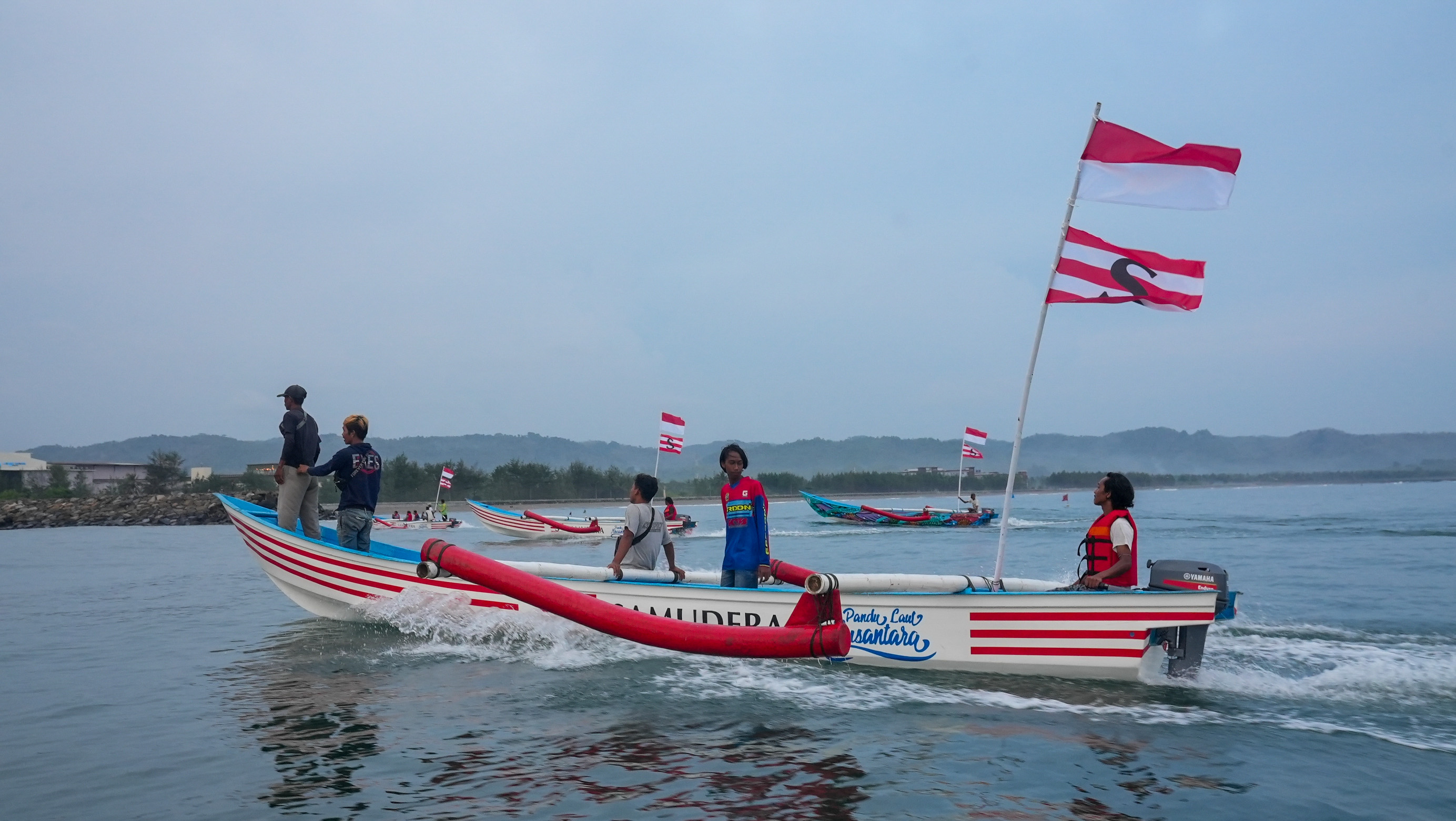
The Gempacs – Pandu Laut Nusantara partnership sought to transform Indonesia’s maritime industry by making boats fully electric. Its approach involved retrofitting existing or constructing new boats with 100% electric systems. This includes installing advanced motors, photovoltaic (PV) roofs, batteries, electronics and geo-localization systems for enhanced safety and emission tracking. The partnership also set up and operated charging stations at ports, integrated with Internet of Things (IoT) software to ensure seamless operation. By providing an integrated marine electrification solution, the partnership aimed to reduce emissions from fishing boats.
Investing in Impact
P4G awarded the partnership around US $350,000 in grant funding.
The Gempacs - Pandu Laut Nusantara (PLN) partnership sought to significantly reduce emissions from fishing boats through a comprehensive marine electrification solution.
In Indonesia, the current state of marine mobility is characterized by traditional, fuel-dependent fishing boats, contributing to environmental degradation. Existing solutions often focus on technology alone, overlooking the intricate web of regulatory, societal and economic factors affecting the sector.
The partnership addressed these challenges comprehensively by not only offering traditional fishing boats a cleaner, more sustainable alternative but also actively engaging key stakeholders, including local cooperatives and policymakers, to ensure that the transition to electric mobility is tailored to Indonesia's unique context, enhancing community engagement, support and socioeconomic conditions.
This multifaceted approach includes retrofitting existing or building new boats with electric motors, photovoltaic (PV) roofs, batteries, electronics and geo-localization systems for enhanced safety and emission tracking. The partnership also provided port charging infrastructure, facilitated access to third-party grants and/or loans for boat owners, and offered species-specific nets and environmental education.
This project provided many benefits to the local community and economy. Boat operators benefit from reduced fuel costs, boosting their income by over 50% from day one and more than 150% after loan repayment. The use of species-specific nets further aids the fishermen, helping them increase their revenues while also protecting marine life. Moreover, electric boats enhance working environments, reducing noise and harmful emissions, improving safety by tracking boat locations in real-time and ensuring the boats maintain their range and autonomy, meaning the boat can navigate and perform tasks with little to no human intervention.
Key achievements during the grant funding period:
- Completed the technical design and procurement groundwork for electric boat deployment, including retrofit systems, hulls, telemetry and charging-related components.
- Secured national e-Katalog approval for retrofitted electric boat systems and advanced TKDN certification preparations for future public procurement eligibility.
- Strengthened policy alignment through engagement with ministries, PLN, BRIN, local governments and international finance stakeholders.
- Built community readiness by surveying 98 fishers, verifying pilot beneficiaries, training 80 coastal women and engaging more than 100 fishers through climate and sustainability outreach.
- Policy linkage with KKP through the Free Carbon Island Initiative and coastal infrastructure planning.
- Initial engagement with the European Investment Bank on blended finance for clean marine transport.
During the P4G funding period, the partnership moved from technical planning toward deployment readiness for 100% electric boat systems. It developed prototypes, prepared retrofit outboards, procured batteries, solar PV, control systems, telemetry and geolocalization components, and secured deployment-ready hulls in Pangandaran. Delivery was delayed by battery management system issues, safety certification requirements and supply-chain constraints, but the work established the technical, operational and beneficiary foundations needed for future deployment.
At the same time, the partnership began strengthening the broader conditions needed for scale. Gempacs and PLN worked with national and local stakeholders on subsidy mechanisms, electricity tariffs, charging infrastructure, certification pathways and public procurement access, including national e-Katalog (an Indonesian-language online procurement platform managed by the Government Goods and Services Procurement Policy Agency) approval for retrofitted electric boat systems.
The partnership publicly launched the Blue Tech Indonesia program in April 2025 at the Pangandaran Airshow, co-hosted with Susi Air and Susi Group. The event brought together government leaders, private sector partners and international stakeholders, and positioned the program as a practical pathway to decarbonize small-scale fisheries through 100% electric boat systems for coastal communities. During the ceremony, Gempacs symbolically handed over five electric boat engines to PLN as part of a broader support package for traditional fishers, including fiber-reinforced boats, sustainable fishing nets and solar-powered charging stations.
Regionally, Blue Tech Indonesia joined accelerator and engagement platforms focused on clean technology and the blue economy, including the BISA Accelerator in Jakarta, supported by UNDP and the British Embassy, the Narwhale VC Accelerator in the Philippines and the IN-BLUE Accelerator in Jakarta. These programs created structured opportunities to refine the business model, strengthen investment readiness and discuss scaling pathways with investors, ecosystem partners, institutional representatives and peer organizations.
A major policy milestone came through the KKP-led Free Carbon Island Initiative in Bangka Belitung, where Gempacs presented Blue Tech Indonesia as a practical model for decarbonizing small-scale marine transport. The dialogue included the European Investment Bank and explored ways to connect marine electrification with broader carbon reduction and blended finance mechanisms, including potential support for large-scale electrification of small fishing vessels. Blue Tech Indonesia’s inclusion in the program, which aims to electrify more than 14,000 small vessels, positioned the initiative as a scalable model for clean marine transport.
Community readiness advanced alongside the technical work. PLN completed affordability and beneficiary verification with fishers, developed training materials on climate change, sustainable fishing, regulatory literacy and coastal conservation, and delivered entrepreneurship and fish processing trainings for 80 coastal women. These activities helped fishers and coastal communities understand the economic, environmental and social dimensions of electric boat adoption and prepared them for post-deployment training, peer learning and administrative support.
The partnership also used regional and international platforms to build visibility, test replication opportunities and engage potential investors. Gempacs represented the partnership at the 2025 P4G Vietnam Summit, joining official sessions and informal bilateral exchanges with Indonesian public-sector representatives, including Bappenas, as well as private sector and international stakeholders. The Summit increased the partnership’s international profile, opened early replication discussions and led one international stakeholder to request a proposal for potential electric boat deployment in Kenya. The partnership also presented its model at investor-facing forums, including the Bali Investment Club Angels and Founders event at Google Campus Jakarta, and held bilateral conversations with venture capital groups from Indonesia, Singapore, Norway, Hong Kong, South Korea, the UK and Vietnam. These engagements expanded the investor network and helped prepare for future capital mobilization. They also underscored an important market lesson: many private investors were not yet ready to invest in marine electric mobility because early blue economy investment cycles began before the sector was mature in emerging markets. This appears to be shifting in early 2026 as more blue economy-focused vehicles raise capital for impact investment in the sector and region.
Gempacs further increased visibility by showcasing its products and services at conferences and events involving UNDP, the Japan investment fund for KKP, the Ministry of Villages, the International Infrastructure Conference, Pelindo, the Green Climate Fund, PLN, ESDM and other partners. Communications work also advanced ahead of the planned boat handover and training launch through visual branding materials, documentation concepts and a press engagement strategy, while Blue Tech Indonesia’s presence at the Pangandaran Airshow strengthened local and regional recognition of the program.
At the institutional level, Gempacs engaged in national policy dialogues with BRIN, ESDM, KKP, the Ministry of Villages, and BKI and. BRIN formally included Gempacs in a national marine electrification working group with other Indonesian electric boat innovators. The group focuses on standards, interoperability, certification pathways, data transparency and alignment with Indonesia’s energy transition roadmap, positioning Gempacs a recognized contributor to emerging maritime decarbonization frameworks.
In parallel, Gempacs consulted with ESDM and PLN on coastal charging infrastructure and marine electricity tariffs. These discussions helped build early consensus on differentiated electricity tariffs for small-scale marine users, balancing affordability for fishers with operational viability for energy providers, and explored regulatory models for charging infrastructure in ports and coastal landing sites.
Beyond formal platforms, Gempacs engaged strategic stakeholders to build momentum for policy alignment and implementation. These included senior representatives from PLN, Pertamina, Samudera Indonesia Shipping, Freeport Indonesia, Pelindo, Sinarmas–Louis Dreyfus Company, national policymakers and parliamentary representatives.
By the end of the grant period, Gempacs had built strong visibility and credibility in national energy and marine policy circles. Blue Tech Indonesia is now recognized as a practical example of how electric propulsion, regulatory alignment, investment readiness and livelihood considerations can work together to accelerate fisheries decarbonization. The partnership also published a white paper "Toward an Equitable Energy Transition: Promoting Subsidies for Electric Boat Engines in Indonesia’s Small-Scale Fisheries".
Lessons learned
- Identified that technical quality assurance, battery system reliability, certification timelines and government policy continuity are critical dependencies for scaling marine electrification.
- Confirmed the importance of pairing technology deployment with affordability analysis, fisher engagement, administrative support and livelihood-oriented training.
The partnership comprised the following partners: Gempacs (lead business partner); Pandu Laut Nusantara (lead administrative partner); PT Octagon Precision Indonesia (strategic and operating partner).
Partners
 (1).png)