Mega Gas Alternative Energy – Somo Africa
About
The Mega Gas Alternative Energy – Somo Africa partnership aims to address two critical challenges in Kenya, indoor air pollution from biomass cooking fuels and plastic waste accumulation, by scaling Mega Gas’s renewable-powered community kitchens that use clean, emission-free cooking gas made from recycled plastic.
Investing in Impact
P4G has awarded the partnership about US $239,900 in grant funding.
Indoor air pollution, primarily from burning charcoal, kerosene and firewood, contributes to severe health risks, particularly for women and low-income households. Meanwhile, plastic waste continues to pile up, with Nairobi alone generating 2,400 tons daily. Mega Gas’s patented thermal cracking technology transforms collected plastic waste into high-calorific, pollutant-free cooking gas. By converting locally sourced plastic waste into cooking gas that is 50% cheaper and burns longer than LPG, the startup offers an affordable, sustainable alternative for low-income households.
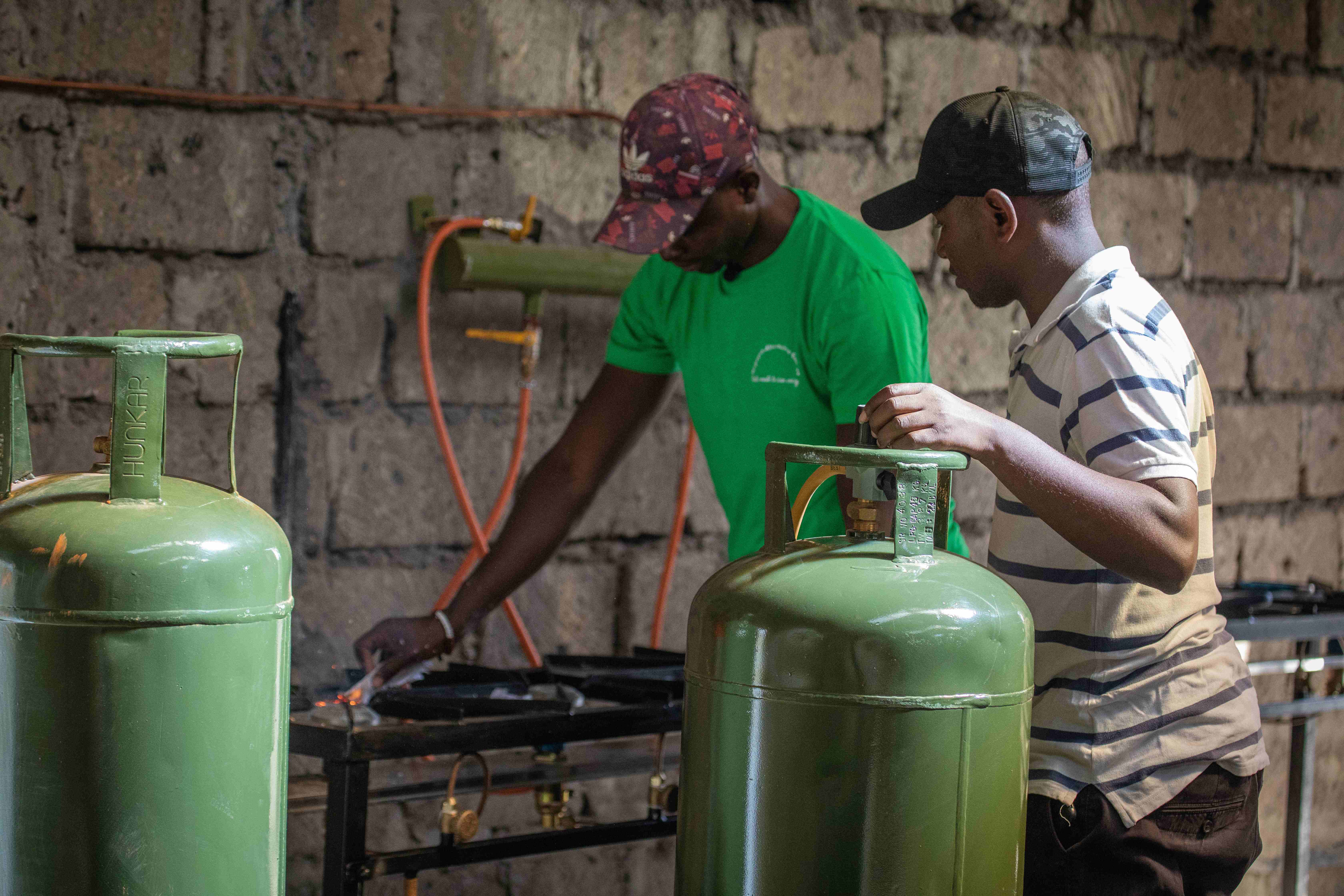
Mega Gas serves customers through community kitchens where users pay a small hourly fee to cook, making clean energy accessible without upfront costs. This shared cooking space reduces household reliance on expensive gas canisters, lowers environmental impact and fosters community engagement.
During the P4G funding period, the Mega Gas Alternative Energy – Somo Africa partnership aims to scale the community kitchen model to reach 4,000 new customers and improve operational efficiency. The partnership will also work to create a supportive regulatory and investment environment. Key activities include policy workshops in collaboration with Kenya’s environmental agencies and regulatory compliance initiatives to secure clean energy and waste management certifications that will open up access to the direct to home gas supplies market.
The partnership also aligns with the 2X Global Challenge by embedding gender equity across its operations. Women, who are most affected by indoor air pollution, are empowered through access to clean energy, employment opportunities and leadership roles within the company. Many women-led community-based organizations collaborate with Mega Gas in plastic collection, ensuring financial stability and sustainable livelihoods. Additionally, the Mega Gas Wallet enables women to affordably access clean energy and essential goods at discounted prices, improving household financial resilience.
To date, Mega Gas has made strong early progress toward large-scale market expansion. Through grassroots marketing and field mobilization, the company acquired 300 new customers. Supplier prequalification and contracting were completed, paving the way for training 100 women entrepreneurs in community kitchen management across multiple regions.
Mega Gas is drafting a policy brief informed by direct engagements with government officials, including a high-impact meeting in Tharaka Nithi County with directors of urban planning and waste management. These discussions provided real-world validation for integrating plastic and organic waste conversion technologies into county development plans.
Under regulatory engagement, Mega Gas has built momentum through direct consultations with counties, municipal officials and regulators. Early dialogues have laid the groundwork for county-specific waste-management policies that incorporate plastic-to-energy solutions and behavior change strategies.
Additionally, Mega Gas participated in capacity-strengthening programs under the Kenya Climate Innovation Center’s SWIFT Programme and joined the Echoing Green fellowship. These initiatives are enhancing the organization’s capabilities in financial structuring, investment documentation, ESG reporting and regional scaling.
The partnership comprises the following partners: Mega Gas Alternative Energy (lead business partner); Somo Africa (lead administrative partner).
Partners