Indobamboo Lestari - Bamboo Village Trust
About
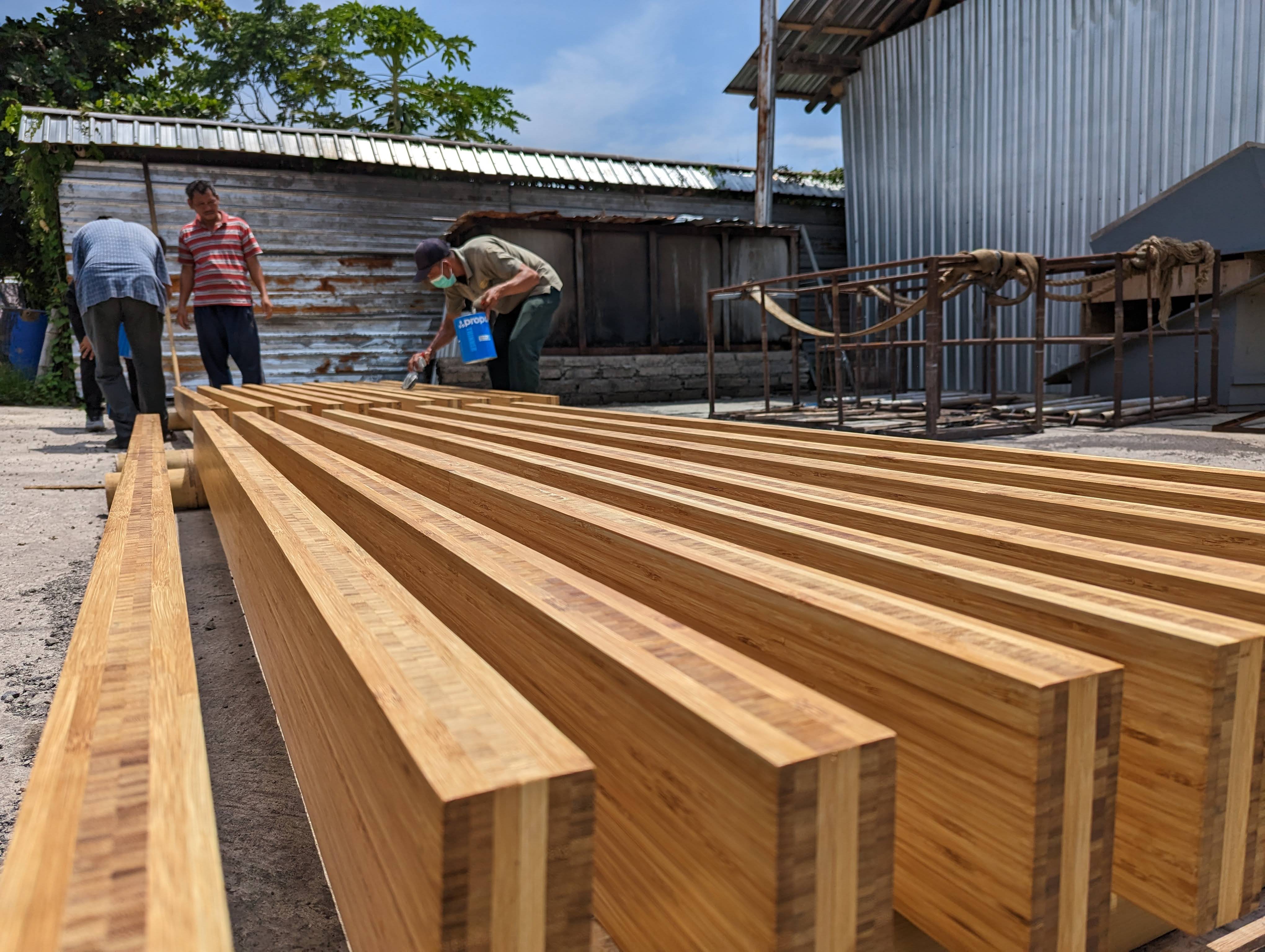
The Indobamboo Lestari – Bamboo Village Trust partnership is scaling the use of bamboo-based carbon negative building products that are manufactured in Indonesia, while supporting rural landscape partners manage and restore degraded landscapes through bamboo.
Investing in Impact
P4G provided the partnership with US $375,000 in grant funding.
The built environment is a major contributor to environmental degradation and greenhouse gas emissions (building materials account for 11% of global greenhouse gas emissions). Meanwhile, the growth of urban centres across the world is dependent on the use of non-renewable resources (e.g. cement, steel), causing further environmental degradation and carbon emissions. There is a pressing need to increase the use of renewable bio-based materials that sequester and store carbon, replacing non-renewable building materials.
Bamboo provides several advantages compared to other wood-based products. It grows fast and can sequester carbon effectively both in forests and as a building product. Additionally, some varieties of bamboo are well suited to restore degraded land, increase water table resilience and biodiversity. Indobamboo, an Indonesian company specializing in the design and manufacture of high-end laminated bamboo products, recognized the potential of bamboo in the construction sector and developed a structural engineered bamboo product that can be used for the construction of multi-story buildings. The waste byproducts generated during the process are turned into briquettes to power Indobamboo’s factory boilers creating a circular and closed loop manufacturing system.
Key achievements during the P4G grant period:
- Completion of BaleBio demonstration pavilion
- Secured provincial government support for developing bamboo villages
Between 2024 and 2025, Indobamboo conducted a comprehensive cradle-to-gate Life Cycle Assessment that showed its engineered bamboo structure demonstrated significant carbon reductions when compared to conventional buildings. A key win during this period was the successful completion of the BaleBio demonstration pavilion that operates as a showcase of structurally engineered bamboo materials and an active platform for stakeholder engagement, training and knowledge exchange.
Indobamboo worked with the Bamboo Village Trust (BVT) to ensure increased social and financial benefits for rural communities who grow bamboo for the business. BVT also supported Indobamboo in securing offtake agreements from village communities growing bamboo, and helping rural communities manage and restore degraded landscapes.
Key Lessons Learned
- Market Readiness and Adoption Dynamics: Market conditions demonstrated the need for the business to adapt its production and pricing to align with industry practice. The business needed to prove itself through lower risk applications first before advancing to structural applications.
- Technical Standards and Certification: Producers of structurally engineered bamboo need to meet two conditions, competitive pricing compared to conventional materials and clear technical standards and certifications.
- Partnership Dynamics: The collaboration between a nonprofit and a commercial partner is helpful in balancing commercial and impact development needs.
Key regulatory barriers need to be overcome to increase the uptake of structural engineered bamboo. Cave Urban and the Green Building Council of Indonesia (GBCI) supported Indobamboo in engaging with relevant ministries to develop a national standard for Indonesia that is safe and fit for purpose for the requirements of the Indonesian building industry and the properties of locally-grown bamboo. The creation of a national standard will enable the development of building codes to support the uptake of bamboo-based building products. The partners made systematic progress toward national standard development and established foundational relationships with relevant entities such as the Ministry of Public Works. They will continue this work to integrate structural engineered bamboo into national building codes based on ISO standards.
The partners also expanded partnerships across Sumatra, Kalimantan and West Nusa Tenggara securing provincial government support for developing bamboo village networks. The startup is working with a leading wood processing company to establish a network of bamboo villages in East Kalimantan and create an integrated agroforestry-to-processing value chain in Nusantara.
On the trade and private sector front, Indobamboo participated in eight major industry events including the World Urban Forum, Bauhaus Annual Event, NY Climate Week among others. The startup also diversified its commercial relationships to reduce risk.
The partnership comprised the following partners: IndoBamboo Lestari (lead business partner); Bamboo Village Trust (lead administrative partner); Cave Urban; Green Building Council Indonesia, Atelier One; Catalyze Communications.
Partners