Zimi Charge – Sustainability Institute
About
The Zimi Charge – Sustainability Institute partnership accelerated the e-mobility transition of fleets in South Africa by developing and maintaining electric fleet charging infrastructure. It provided fleet operators with data to make decisions that enhance performance and efficiency.
Investing in Impact
P4G awarded the partnership with around US $465,000 in grant funding.
Zimi Charge powers businesses’ transition to electric vehicles (EVs), providing the support, software and infrastructure need as they scale to more sustainable options. It also offers carbon tracking and monitoring insights that allow fleet operators to optimize their fleet’s operational behavior including charging patterns and energy usage.
Road transportation accounts for 11% of South Africa’s emissions with fleet operators contributing to 8% of that total. There are environmental and cost benefits involved in an electric fleet transition and industry trends signal significant investments in electric vehicles. South Africa is expected to have more than 25,000 electric vehicles on the road by 2025 and electric vehicle sales are expected to eventually surpass internal combustion engine sales (ICE). This growth can be attributed to several factors including rising fuel prices, the lower cost of electric vehicle maintenance over its lifetime, and the continuing decline in prices of electric vehicles.
Zimi Charge stations work with any type of electric vehicle and customers have pricing options that include purchase, rent-to-own, and Charger-as-a-Service plans.
Zimi Charge’s target customers are fleets engaged in delivery, last-mile logistics and technical services. The company has a competitive advantage in the electric vehicle charging space because of its integrated solution, allowing them to save fleets up to 90% on their fuel bill and roll out three times more infrastructure at the same cost. In addition to advanced charging features such as verified carbon standard reporting and mobile payments, it also provides infrastructure financing solutions to overcome the high upfront costs.
The startup worked with the Sustainability Institute to transition all campus transportation services to an electric fleet. The Sustainability Institute has a solid track record in managing local and international projects and brings a wealth of knowledge and experience through its extensive network.
Zimi Charge’s top successes during the P4G funding period between 2024 – 2026:
Designed, tested and deployed Zimi charging solutions, including the Z4 AC charger and 60 kW and 120 kW DC chargers, supported by a proprietary charge point operations platform.
Secured deployments with Bakers Limited, Bidvest International Logistics and DP World, with more than 30 qualified fleet leads in the pipeline.
Grew the installer network from two to six partners across Gauteng, the Western Cape and KwaZulu-Natal.
Completed due diligence materials, investor decks and financial models, held more than 38 investor meetings and progressed DBSA funding contracting for US $3.08 million.
Completed its Youth EV Learnership Program, training six learners and placing them with partner companies.
Embedded carbon tracking into the Zimi platform, secured board approval for the ESG strategy, and advanced policy engagement on EV adoption in South Africa.
Zimi Charge made significant progress in product development, platform readiness and technical integration during the reporting period. The company designed, manufactured and deployed the Zimi Z4 AC charger, expanded its DC charging range with 60 kW and 120 kW chargers, and strengthened its internal engineering capacity by adding two full-stack engineers. It also released Zeus, its proprietary charge point operations and energy tracking platform, which now integrates AWS-based backend infrastructure, IoT Core, customer onboarding, live charging analytics, Hex reporting and telematics data from providers including Mix Telematics, Cartrack and Webfleet. These developments have improved Zimi’s ability to support fleet operators with charging management, energy monitoring, battery performance insights, fuel savings analysis and emissions reporting.
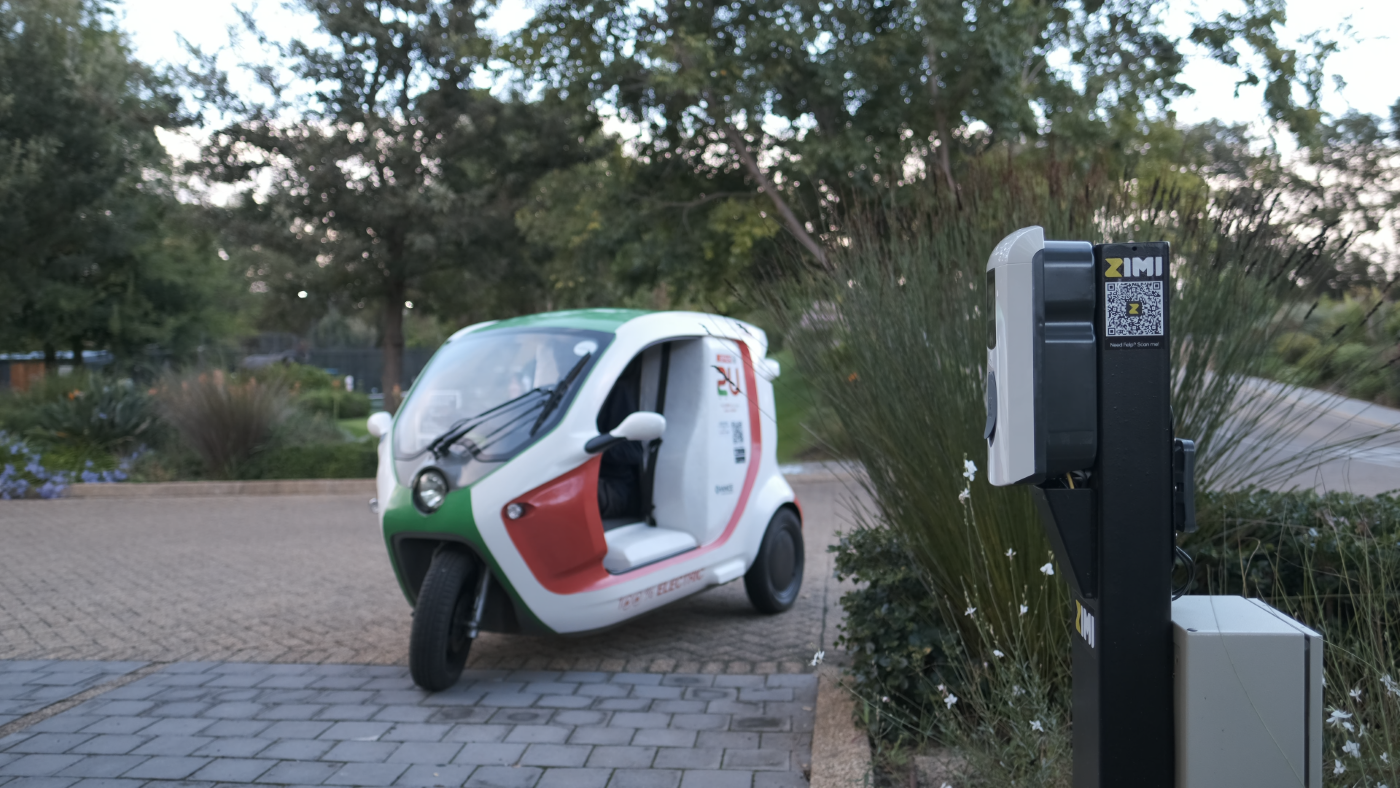
The Sustainability Institute advanced its transition to a zero-carbon campus fleet by installing a new parking area equipped with two 22 kW EV chargers, supported by a renewable energy system comprising a 5.5 kWp solar array, a 15.1 kWh battery bank and an 8 kW inverter sponsored by the Stellenbosch University Research Group. The Institute also completed a comprehensive fleet analysis and finalized vehicle selection for passenger transport and shuttle services. These upgrades have enabled practical electrification of campus transport, with World Wildlife Fund (WWF) beginning to use an EV for field services and the Green Café transitioning its transport to a City Blitz EV.
Commercially, Zimi Charge strengthened its market position through an expanded installation network, a dedicated sales and business development function, standardized sales materials and finalized service-level and asset lease agreements. Its installation network grew from two to six partners across Gauteng, the Western Cape and KwaZulu-Natal, enabling broader deployment capacity in key regions. Zimi onboarded and supported major commercial fleet customers including Bakers Limited, Bidvest International Logistics and DP World, expanded Bakers to a second site and confirmed five additional fleet sites for technical scoping. A successful campaign with Bakers highlighted nearly 70% fuel savings and a 33% reduction in fleet carbon emissions by using Mercedes-Benz eActros and eSprinter models powered by Zimi’s 120 kW DC charger, reinforcing the commercial and environmental value of fleet electrification.
Holocene provided sustained business-building support throughout the period, contributing to stronger governance, financial planning, customer development and fundraising readiness. This included participation in monthly SteerCo sessions, quarterly financial reviews and board meetings, as well as client and funder introductions, event support and strategic advice on debt financing structures with partners such as Untapped and IDC. Holocene also supported the preparation of due diligence materials, investor decks, financial models and outreach strategies. As a result, Zimi held more than 38 investor meetings and progressed DBSA funding of US$2.8 million into final contracting, while preparing for a structured capital raise involving banks, venture debt funds, development finance institutions and venture capital investors.
Zimi Charge and the Sustainability Institute also delivered important workforce development and just transition outcomes. Through the Youth EV Learnership Program, developed with subject matter experts, six learners completed classroom and practical training covering sustainability, personal development and technical EV content. The learners subsequently transitioned into placements with partner companies, demonstrating how fleet electrification can create pathways for skills development and employment in South Africa’s emerging new energy and e-mobility sectors.
Zimi advanced its carbon tracking, ESG and market leadership agenda in parallel with its commercial and technical growth. The team completed foundational work on carbon emission factors for electricity and fleet energy use and integrated a carbon database into the platform. Customer testing has helped refine carbon calculations, vehicle matching, data integrity and emissions reduction reporting. The ESG discovery phase, informed by stakeholder interviews and external consultancy support, was consolidated into an ESG strategy and related publication on ESG practices, EV adoption and emissions management in fleet operations. The strategy has since been approved by the board and incorporated into governance, investor due diligence and reporting processes.
Zimi also strengthened its profile as a climate-tech and EV infrastructure leader through participation in the Climate Study Group on Blended Finance, World EV Day at Naspers, the South African Innovation Summit and other sector convenings. Its policy engagement included digital workshops on the Green Transport Strategy and EV White Paper, a multi-stakeholder workshop on EV investment, letters to relevant ministries and two drafted policy briefs. Media exposure, including interviews with the World Intellectual Property Organization, further amplified Zimi’s visibility and reinforced its contribution to a more coordinated enabling environment for fleet electrification in South Africa.
Knowledge products include:
- Driving Change: A Case Study on Zimi’s Integrated EV Solution for Fleet Decarbonization
- Policy Brief: Advancing the Green Transport Strategy in South Africa
- Policy Brief: Advancing the EV White Paper in South Africa
Key lessons learned:
Charging infrastructure must be designed around fleet operations, third-party systems, data needs and client workflows.
Customers respond best to integrated fleet transition solutions that combine vehicles, charging, energy planning and carbon tracking.
A blended finance approach, supported by strong investor materials and relationship management, is essential in a tighter fundraising market.
A formal ESG strategy supports partner alignment, investor confidence and long-term governance.
Research on cost savings, energy security and service-level requirements should inform advisory services, product design and policy engagement.
Workforce programs need early employer engagement to improve employment outcomes.
The partnership comprised the following partners: Zimi Charge (lead business partner); Sustainability Institute (lead administrative partner); Holocene.
Partners