Takazuri – Kwale Recycling Centre
About
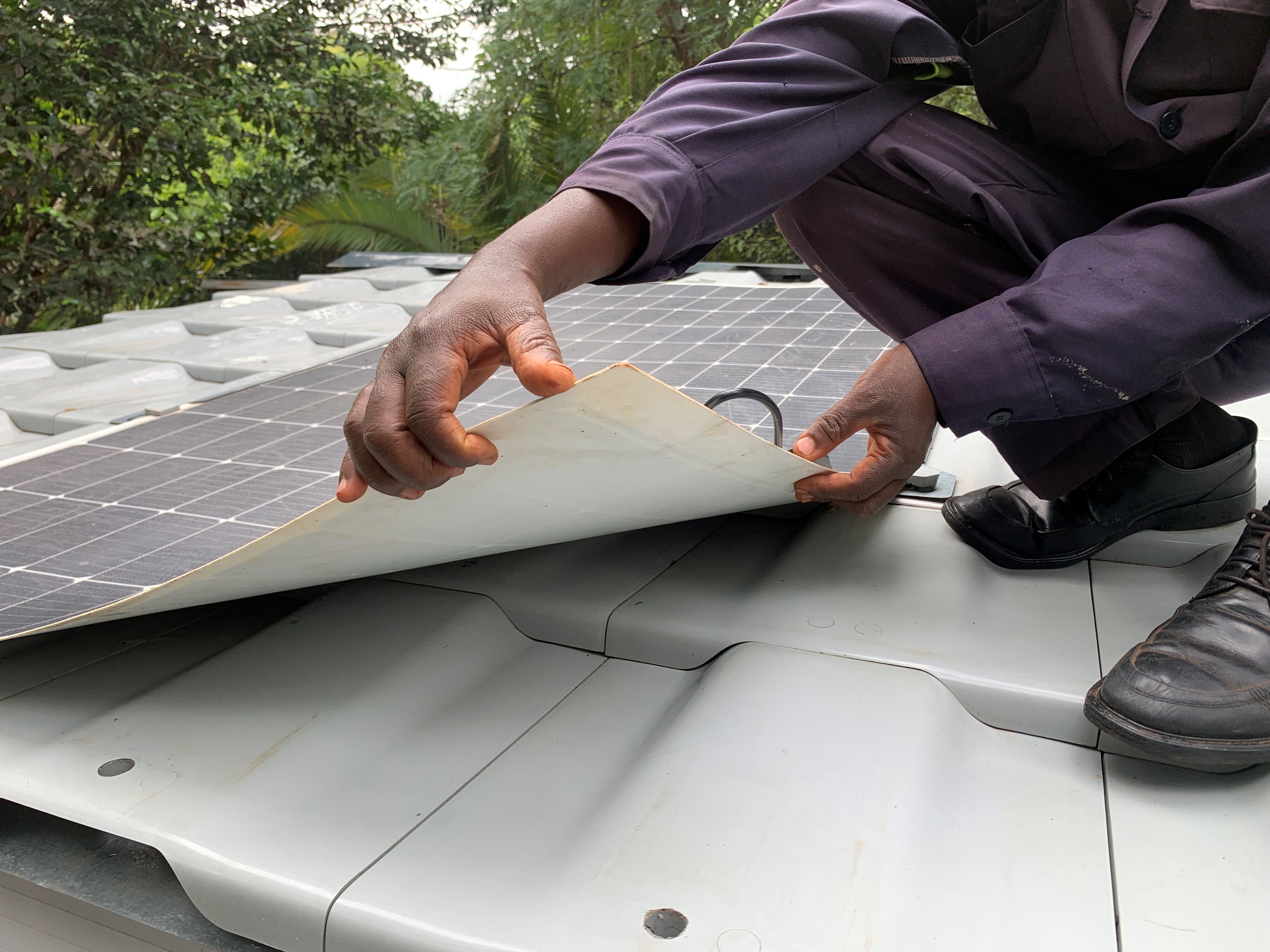
The Takazuri – Kwale Recycling Centre partnership is scaling Climatile™, a cutting-edge lightweight rooftop tile that integrates solar panels and safe rainwater harvesting. The solution offers Kenya a three-fold benefit of improved access to clean energy, water resilience and plastic waste management.
Investing in Impact
P4G awarded the partnership around US $450,000 in grant funding.
Takazuri produces Climatile™, a lightweight rooftop tile that can support the company’s thin solar panels and collect rainwater.
The Kenyan solar market is growing rapidly and is one of the leading solar markets in the world. The country is also experiencing an increased housing demand, which makes Climatile™ well positioned to advance Kenya’s sustainable energy, waste management and housing priorities.
Innovations in the tile design compared to other products on the market include:
- An interlocking system that does not require skilled labor for installation and does not damage rooftops
- A lightweight tile incorporating thin solar panels that do not add substantially more weight to roofs and are more suitable for Kenyan houses since they do not compromise their structural stability
- Cool roof technology that enhances insulation and reduces energy costs
- Design that is safe for and facilitates the collection of rainwater
- Tile made from recycled plastics that can also be recycled at the end of its life
Takazuri’s business approach includes a mix of bespoke and large-scale manufacturing. The company works with local plastic waste collection and manufacturing facilities in Kenya to develop smaller volume, bespoke products. The startup contracts with larger manufacturers who have the facilities for larger volume runs.
Tazakuri partnered with Kwale Recycling Centre (KRC) to scale this solution. KRC specializes in plastic waste collection from urban and coastal areas in Kenya. This collaboration ensured a steady supply of plastic waste that can be transformed into rooftop tiles. KRC also worked on upgrading its equipment to scale job opportunities to women and youth in waste collection, processing and operations. KRC is actively working with the Kenyan government at national and local levels on regulatory frameworks for waste management policies. On behalf of the partnership, it engaged its existing relationships to expand the enabling environment work to include regulatory frameworks for recycled building materials, solar projects and sustainable manufacturing.
During the P4G funding period, Takazuri raised US $137,000 in commercial investment and created 45 new jobs. The partnership collected 80 metric tons of waste and projected strong gender balance with 50% of women being in senior leadership positions in the startup.
Key Successes
- 83kW solar installation covering 600 m² of roofing
- Over 15 installations completed
- KEBS certification and compliance with global performance standards
- Inputs into Waste Management Act to ensure recognition and professionalization of informal recyclers
During the P4G funding period, Takazuri and KRC advanced the commercialization of Climatile and strengthened Kenya’s enabling environment for sustainable building materials. Takazuri conducted extensive market analysis to define viable market segments, validate product performance, and refine its dual product line, Climatile Pro and Climatile Lite. Pilot projects, included an 83 kW solar installation covering 600 m² of roofing, and confirmed Climatile’s technical and commercial viability. The team produced investor-ready materials, secured global recognition through platforms such as MIT Solve, the World Economic Forum’s Uplink Empowering Vulnerable Communities Challenge, and Fast Company’s World Changing Ideas Awards. The startup also built partnerships with major industrial players like BASF, Doshi Steel and Steel Structures Ltd to localize production and scale distribution.
To strengthen its market entry, Takazuri developed a full marketing, distribution and sales strategy supported by a dedicated operations team. The company launched a refreshed digital presence, created comprehensive marketing collateral, and built an ambassador program that generated new client leads and installations. The partnership also signed commercial offtake agreements with Powerhive and Dojo Health Club for Climatile solar canopies and gazebos, which became flagship demonstration projects. Over 15 installations were completed. The company also secured KEBS certification from the Kenya Bureau of Standards (KEBS), confirming product compliance and safety, and advanced international testing through BASF and Gabriel Chemie to align Climatile with global performance standards.
KRC complemented Takazuri’s commercialization efforts by leading policy advocacy and community mobilization for circular economy adoption in Kenya’s coastal region. Over 480 youth, mostly young women, were trained in waste management and entrepreneurship through the Walezi Wa Asili (Nature Guardians) program, and waste collectors received professional recognition and protective equipment under KRC’s collaboration with the Diani Municipal Board. To strengthen its supply chain, Takazuri and KRC co-developed a Climatile guide for plastic collectors and recyclers and launched a training campaign with Technoserve targeting youth-led micro-enterprises. Recognizing the importance of inclusivity, the program actively encouraged young mothers and persons with disabilities to participate by allowing them to bring caregivers for childcare and additional support during training sessions.
KRC also launched a Climatile buy-back scheme with Wasini Waste Free, the first Shimoni-based youth group, to conduct regular buy-backs and divert ocean-bound plastic from the Port of Shimoni and Wasini Island. It partnered with REEFolution to create a plastic aggregation center in Shimoni, supporting ocean-bound plastic diversion and local plastic supply chains. KRC contributed to the drafting of the Kwale County Sustainable Waste Management Act, ensuring formal recognition of waste collectors in local legislation, and engaged in Extended Producer Responsibility discussions convened by Kenya Private Sector Alliance (KEPSA) and the Kenya Extended Producer Responsibility Organization (KEPRO). These initiatives helped professionalize informal recycling, promote inclusive livelihoods, and secure supply of quality recycled polypropylene for Climatile production.
Together, Takazuri and KRC expanded awareness through over a dozen public exhibitions and policy forums, including the 2025 P4G Vietnam Summit, the Kenya Green Building Society Conference, Intersolar Europe, Africa Conservation & Ocean Forums, BlueInvest Africa, Affordable Housing Week, the ASK Mombasa Show, Plastic Recycling Show Europe, Africa Tech Summit and ProPak East Africa, sparking commercial interest from counties like Kilifi, Tana River and Kwale. These events positioned Climatile as a leading model for circular construction in Africa, bridging climate adaptation, renewable energy and sustainable materials.
The partnership also engaged regulatory agencies such as KEBS, National Environment Management Authority (NEMA) and the Architectural Association of Kenya to streamline certification processes and advocate for inclusion of circular materials in Kenya’s National Building Code 2024 and Affordable Housing Act 2024. Takazuri led workshops with Kenya Green Building Society (KGBS), C40 Cities and the Norwegian Refugee Council to address regulatory barriers to green building adoption.
Finally, the partnership laid the groundwork for long-term circular innovation through pilots like the “Trade Waste for Climatile” program, which explored models to exchange plastic waste for affordable roofing. Although a full material-for-product exchange proved economically unviable, it evolved into a co-financing concept to be advanced under the SWEEP initiative.
Takazuri and KRC will continue to scale Climatile through new pilots in humanitarian settings and extended partnerships with Mr. Green Africa, BASF and Green Voyage. Collectively, their P4G-supported work established Climatile as a technically proven, market-ready solution and positioned the partnership as a driving force in Kenya’s circular and climate-resilient construction ecosystem.
During the P4G grant period, the partnership developed three knowledge products:
- Takazuri Business Model Case Study
- Policy Brief on Strengthening Kenya’s Green Building Regulation and Circular Construction Framework
- Working Paper Outlining Challenges in the Recycling Manufacturing Sector
The partnership comprised the following partners: Takazuri (lead business partner); Kwale Recycling Centre (lead administrative partner).
Partners