eBee Kenya – Sustainable Transport Africa
About
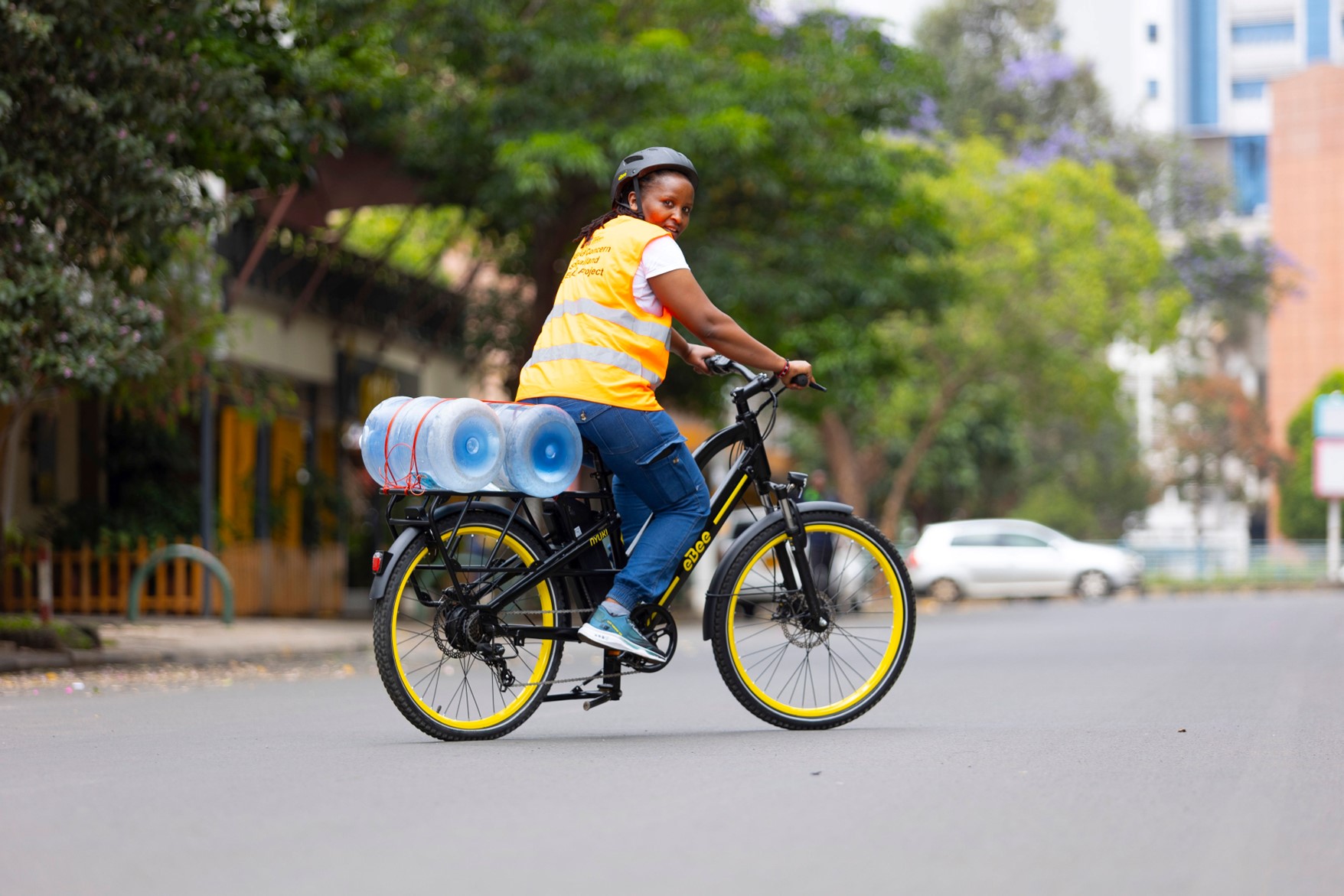
eBee Kenya – Sustainable Transport Africa is accelerating electric bicycle adoption in Mombasa and Nairobi, Kenya. The partnership will leverage a proprietary loan product and an existing credit guarantee scheme to make e-bicycles more accessible and affordable. Beyond selling electric bicycles, eBee Kenya aims to leverage its insights to shape a national expansion plan, create meaningful employment opportunities and empower women to participate actively as riders.
Investing in Impact
P4G has awarded the partnership about US $350,000 in grant funding.
By 2030, half of Africa's 1.6 billion people will live in cities, highlighting the urgent need for sustainable urban transportation. In Kenya, urban areas face worsening congestion, pollution and socioeconomic disparities due to a reliance on diesel-powered vehicles and a decline in cycling. Bicycles are often viewed as outdated, leading to reduced usage despite their environmental and economic benefits.
Additionally, lack of dedicated cycling lanes, pedestrian crossings and proper lighting endanger cyclists and discourages adoption. eBee Kenya seeks to make cycling desirable, accessible and sustainable. To date, eBee has distributed more than 1,500 e-bicycles, reducing 1.562 tons of CO2 emissions and has created over 300 direct jobs.
eBee is actively engaging with leading forums, including those hosted by the Kenya Association of Manufacturers, Electric Mobility Association of Kenya and World Bicycle Relief; it initiated high-level conversations with UNEP, UN-Habitat and Nairobi City County to push for cycling-friendly infrastructure and policy changes. The startup also launched a LinkedIn page and WhatsApp group for the House of Cycling, a collaborative platform uniting public and private sector players, NGOs and advocates to promote cycling in Kenya.
These efforts have led to meaningful connections with government agencies like the National Transport & Safety Authority, the Kenya Urban Roads Authority (KURA) and Kenya National Highways Authority (KENHA) to inform the integration of pedestrian and cyclist safe roads and guide road design frameworks and inform policy strategies aligned with Kenya’s infrastructre development goals.
eBee also had the honor of participating in a high-level engagement during the state visit of His Majesty King Willem-Alexander and Her Majesty Queen Máxima of the Netherlands to Kenya. The event brought together Dutch businesses and Kenyan government representatives to explore opportunities for collaboration in trade, investment and innovation across key sectors.
eBee contributed to the Stakeholders' Consultative Forum on Electric Mobility in Kenya, which focused on integrating e-mobility into educational curricula. In collaboration with GIZ and other partners, the startup is supporting efforts to develop specialized training programs that equip students with the skills needed to grow the sector. At the E-Mobility for Counties Stakeholders Workshop, co-organized by the Electric Mobility Association of Kenya (EMAK), Practical Action and GIZ, eBee shared lessons on electric bicycle adoption, green job creation and financing innovations. During an ESMS Toolkit Validation Workshop, convened by Practical Action, eBee contributed to discussions on ESG integration in the e-mobility sector, emphasizing responsible growth and investor readiness. The startup also championed gender inclusivity, with team representation in a GIZ-led forum on women’s participation in technical e-mobility roles.
To address affordability and access, eBee hosted a Finance Experts Roundtable and a dedicated session at its Kilimani office focused on unlocking growth finance for e-bicycles. These conversations brought together key stakeholders like Proportion Global, Challenge Fund for Youth Employment and Growth Africa to explore innovative financing models. It also conducted training sessions with Equity Bank staff in Mombasa to expand the understanding and uptake of e-bicycles in key urban markets.
eBee hosted a high-level government bike ride, on World Cities Day 2025, aligning with Urban October and Placemaking Week in Kenya. This strategic choice positioned the ride within an active policy and advocacy moment, enabling deeper engagement from Nairobi City County, National Transport and Safety Authority (NTSA), KURA, Nairobi Metropolitan Transport Authority (NaMATA), UN-Habitat and others. The ride documented real cycling challenges, followed by an Institute for Transportation and Development Policy (ITDP)-led workshop using the collected data to inform Non-Motorized Transport (NMT) planning and introduce the Partnership for Active and Accessible Mobility in Africa (PAAPAM) platform for long-term collaboration.
eBee continues to grow its visibility through social media campaigns and its popular weekly Happy Hour Rides, which bring professionals and commuters together to experience cycling in Nairobi. These rides have become a powerful advocacy platform, demonstrating the benefits of e-mobility and highlighting the need for safer cycling infrastructure.
Significant achievements were made in expanding access to financing for e-bicycles. eBee deepened partnerships with FlashPesa and Numida – finance providers – to pilot digital loan products, enabling riders, small business owners and delivery workers to acquire e-bikes through streamlined mobile applications. Over 20 e-bikes have already been financed through FlashPesa.
Finally, eBee continues to support sector-wide skills development through collaboration with Life Skills Promoters, government ministries and training institutions to design competency-based curricula for e-bike and e-motorbike mechanics.
During the partnership period, eBee aims to scale these efforts, deploying 100 e-bicycles through group and individual asset financing with the goal to increase access to financial products for entrepreneurs. Additionally, eBee will provide technical support and training on the assembly, maintenance and use of e-bicycles, creating 200 jobs and offsetting over 28 tons of CO2 emissions per year. Moreover, it will execute a social media campaign to further advocate for integrating cycling and walking infrastructure into urban planning.
Sustainable Transport Africa and Critical Mass Nairobi will host two high-level bike rides with government officials to provide decision-makers with firsthand experience on the challenges cyclists face and encourage support for cycle infrastructure improvements.
With partners, it will also hold workshops to train technical teams from relevant government agencies on designing streets that accommodate cyclists, pedestrians and public transport.
The partnership comprises the following partners: eBee Kenya (lead business partner); Sustainable Transport Africa (lead administrative partner) and Critical Mass (execution partner).
Partners