agriBORA – CIAT

About
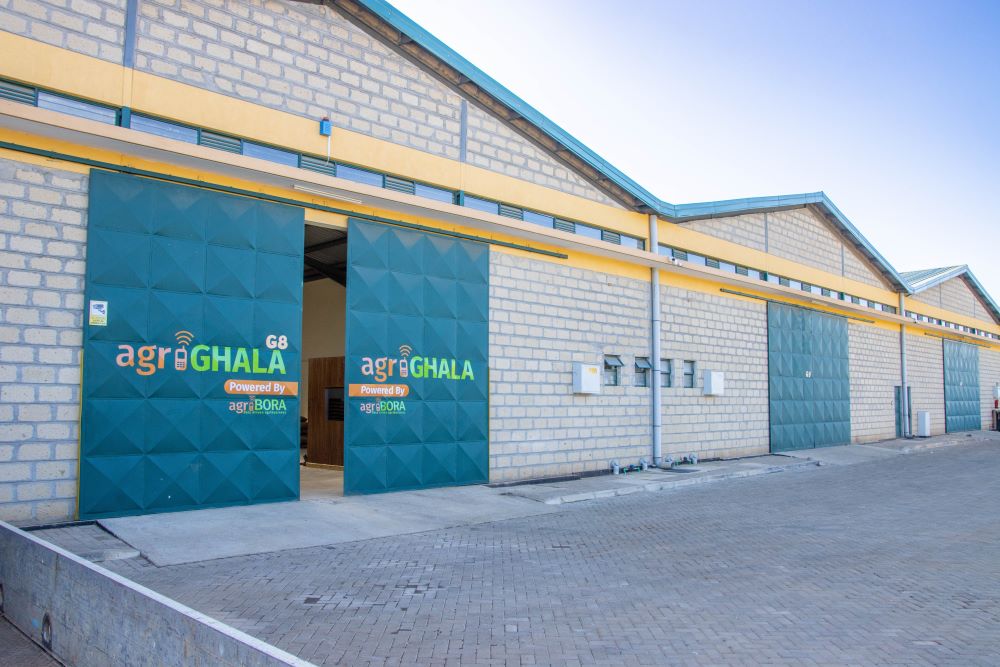
The agriBORA – CIAT partnership introduces a Warehouse Receipt System (WRS) that allows farmers in climate vulnerable regions in Kenya to store their produce in climate-controlled warehouses and sell them at favorable market prices. The WRS, dubbed agriGHALA, will provide beneficial services to farmers like financial inclusion, training on climate smart practices, and enabling market linkages. By optimizing crop production, the WRS will decrease post-harvest loss, strengthen income stability and reduce carbon emissions.
Investing in Impact
P4G has awarded the partnership about US $406,000 in grants across two funding rounds.
Smallholder farmers in Kenya experience up to 40% post-harvest loss in addition to challenges with accessing finance and high-quality inputs. Without access to affordable climate-controlled storage, farmers often store their produce in their homes exposing their produce to spoilage and pests. This also forces farmers into selling their produce immediately after harvesting at lower prices, exposing them to the risk of potential income loss due to unfavorable market conditions.
agriBORA is an early-stage Kenyan company offering an end-to-end ecosystem that gives farmers access to climate-smart inputs, climate-controlled warehouses, finance and market connections through a network of local hubs. Its network of agriHUBS provides farmers with climate-resilient seeds, bio-fertilizers and sustainable advisory services, functioning as reliable one-stop marketplaces that connect farmers with fair market access. agriBORA’s digital platform integrates independent agriHUBs with digital tools like:
- agriKOPA – a credit recommendation solution allowing farmers to access loans for agricultural inputs
- agriPOS – a digital point-of-sale system for easy inventory management and tracking
- agriGHALA – a Warehouse Receipt System that allows farmers to store their crops in climate-controlled warehouses and use their stored produce as collateral for loans through agriKOPA
By digitizing their business, agriBORA allows agriHUBS to manage and track their inventory and understand their financing options easily. agriBORA now has a network of 270 agriHUBs across 12 Kenyan countries that reach more than 110,000 farmers. In 2022, the agri fintech startup won the African Earth Observation Challenge and was recognized by Agriculture 100 as a top agriculture technology provider.
Of significance, agriBORA, with the support of P4G, underwent a due diligence process that allowed the startup to pivot its business model from focusing solely on providing inputs to farmers to offtaking farmer’s output, i.e. produce. This was an important decision that allowed the partnership to focus its efforts on providing a specific value proposition that is aligned to its mission to provide post-harvest management solutions.
As part of that pivot, agriBORA will develop market intelligence related to price ceilings and floor indices to better support farmers make store-or-sell decisions. To further strengthen informed decision-making among farmers, the startup will design climate advisories to help farmers identify optimal harvest timing, drying protocols and storage recommendations.
Price crashes are one of the greatest barriers to adoption. The startup will attempt to overcome this by co-designing a price floor insurance with insurance partners and testing it with a limited customer segment.
The startup’s primary customer segments are agriHUBs who enable smallholder farmers to leverage the policy-enabled Warehouse Receipt System to store their produce and access cash advances while waiting for better market prices; agriprocessors who require steady and high-quality harvested crops and can source directly from agriHUBs’ farmers; and financial service providers who get connected to farmers through agriBORA.
The International Center for Tropical Agriculture (CIAT) is an agricultural research arm of CGIAR. The organization will support agriBORA with monitoring and evaluation, survey populations for prioritizing climate-smart agriculture interventions, and evaluate the impact of these interventions.
During the partnership period, agriBORA will run two fully operational warehouses for farmers in its target counties. The startup is making steady progress on the setup of a warehouse in Eldoret County. Initial site visits were completed by Warehouse Receipt System Council compliance teams, a preliminary step to ensuring compliance with WRS requirements. The startup has also obtained the necessary business permits and licenses, a critical step toward ensuring regulatory compliance.
The startup also aims to implement a subscriber service for farmers to receive price updates and reach 10,000 farmers. Another goal is to have at least 500 smallholder farmers leverage the Warehouse Receipt System as collateral for credit during the funding period.
agriBORA has developed a baseline survey tool to assess WRS adoption, post-harvest handling practices and digital readiness among its target audience. The results from the survey will also be used for accurate interventions designs.
agriBORA has made progress in confirming market interest and linkages for crops like maize and sorghum. These agreements, when finalized, will provide farmers with stable clients for their produce and improve their financial stability.
agriBORA participated in the 2025 P4G Vietnam Summit where it pitched its model to a panel of investors. agriBORA aims to raise about US $4.5 million, create about 2,000 jobs, and positively affect 500,000 individuals.
The partnership comprises the following partners: agriBORA (lead business partner); CIAT (lead administrative partner).
Partners